
Living Traditions in Andalucía
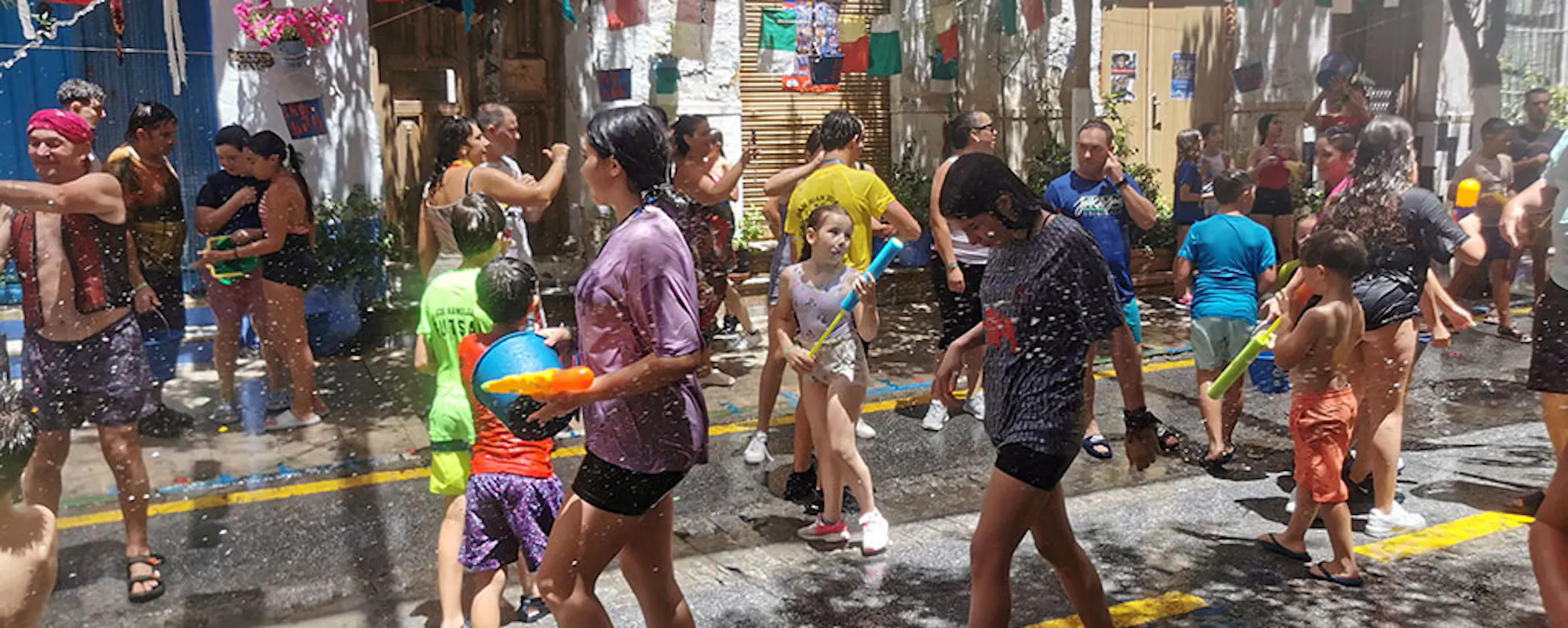
In Lanjarón, for one night each year at the end of June, locals and tourists engage in a massive water fight
Wherever you are in Spain, but particularly in Andalucía, you are likely to know the name of a small town in Las Alpujarras, even if you have never been there. Order a bottle of water in a bar, or buy one in a shop, and the name you will most likely see emblazoned across it is Lanjarón – a place that is famous for water in more ways than one.
This modest town was the first in Spain to bottle its spa water, and you can still drink the water free of charge direct from the spring. There are also several fountains scattered throughout the town where you can fill up your bottles before a walk or a day out. Lanjarón is also a spa town in the old-fashioned sense of the word, and at the balneario you can find all sorts of treatments, from the cosmetic to the therapeutic, all based on the supposed virtues of the local water.
But the one week of the year when you can really experience just how important water is to the local community is from 23 June, the Noche de San Juan, to 26 June.
From midnight on the 23rd, everyone – old and young, resident and tourist, ready or not – will get wet as what is often claimed to be the biggest water fight in Spain, in Europe, and possibly in the world begins. The aim is disarmingly simple: to soak and be soaked, before going off for a drink and a bit of a party.
The biggest shock you will encounter is that a water pistol is not going to cut it. On the balconies of the main street you will see water hoses worthy of fire stations, and the residents are not in the slightest bit ashamed to use them. You can get your own back, at least a little, by buying a bucket before the fun starts (they are on sale everywhere), standing under a hose to fill it up, and then throwing the contents over whoever happens to be nearest.
In less than an hour, the party has moved from one end of the town to the other, the main street has become a river, and you will wish you had worn your swimsuit after all.
Spain and the Art of the Organised Free-for-All
Lanjarón’s water battle may be the most soaking, but it is far from the only example of Spain’s fondness for festivals that involve collective, joyful chaos.
The most famous, of course, is La Tomatina in Buñol (Valencia), where every August tens of thousands of people pelt each other with overripe tomatoes until the streets run red and slippery. In Cascamorras, celebrated between Guadix and Baza in Granada province, participants chase a man covered in oil and paint until everyone ends up blackened from head to toe. In Ibi (Alicante), the Els Enfarinats festival sees rival groups bombard each other with flour, eggs and fireworks in a surreal mock coup d’état.
Even water itself appears again and again in Spanish popular culture. In Telde (Gran Canaria) and Lanzarote, there are carnivals and fiestas where water fights are part of the tradition. On Noche de San Juan all over Spain, people head to beaches, light bonfires, jump over flames and run into the sea at midnight, a pagan ritual of purification and renewal that predates Christianity by centuries.
What all these events share is a very Spanish idea: that once a year, normal rules can be suspended, dignity abandoned, and everyone – locals and visitors alike – becomes part of the same, slightly ridiculous, wonderfully human spectacle.
Why Lanjarón Is Different
What makes Lanjarón special is not just the scale of the soaking, but the way the whole town seems to conspire in it. This is not a festival you watch from the sidelines. Balconies become battlements, hoses become weapons, and every narrow street turns into a funnel of water, laughter and shouting.
There is also something rather fitting about a town built on water deciding, once a year, to waste it as extravagantly and joyfully as possible.
By the early hours, shoes squelch, clothes cling, and nobody remembers quite who started what. People drift off to bars, still dripping, to drink beer, eat tapas and compare stories of ambushes and soaking. The next morning, the streets are washed clean, the town returns to normal, and Lanjarón goes back to bottling its water for the rest of Spain.